Wade on Birmingham

Archive for 'B’ham'

Books: Excerpt from Carla Jean Whitley’s ‘Muscle Shoals Sound Studio’

Sunday, December 7th, 2014
Carla Jean Whitley, Muscle Shoals Sound Studio

Cheryl Joy Miner

The following chapter is an excerpt from Birmingham author Carla Jean Whitley’s “Muscle Shoals Sound Studio: How the Swampers Changed American Music” [aff. link]. She is managing editor of Birmingham magazine, a freelance writer and a journalism instructor at the University of Alabama and Samford University, plus a good friend.

Her newest book is “Balancing Act: Yoga Essays.”

In this excerpt, Whitley shares how the Rolling Stones snuck in a recording session in Muscle Shoals in between stops on its 1969 U.S. concert tour.

• • •

The Rolling Stones

“I know I’ve dreamed you a sin and a lie
I have my freedom, but I don’t have much time
Faith has been broken, tears must be cried
Let’s do some living after we die
Wild horses couldn’t drag me away.”

— “Wild Horses,” Rolling Stones

They really weren’t supposed to be there.

The Rolling Stones pulled in to Sheffield, Ala., on Dec. 2, 1969. Two nights earlier, they had wrapped a thrilling performance in West Palm Beach, Fla.

The band had a few days of downtime before their next big show, the soon-to-be-legendary Altamont performance in Los Angeles. The free show drew 300,000 fans to Altamont Speedway, and it was the site of four births and four deaths, including a stabbing death committed by a member of Hells Angels just in front of the stage. But before they went on to make rock ’n’ roll history on Altamont Speedway, the band hoped to sneak in a little recording time.

There was a problem, though: Union complications and back taxes meant the Rolling Stones weren’t actually supposed to be on a working vacation. Not that it stopped anyone. Part of the appeal of recording in the Shoals, after all, was its out-of-the-way location, and the Stones had been assured their visit could be kept secret. A band could show up with British accents and flamboyant style and still go unrecognized.

After all, Muscle Shoals Studio was a nearly unknown entity. The owners had a little backing and plenty of talent, but there was only one hit to the fledgling business’ credit: R.B. Greaves “Take a Letter, Maria.” Cher’s “3614 Jackson Highway,” the Muscle Shoals Rhythm Section’s first attempt at working with a well-known artist under the auspices of its own studio, was a commercial nonstarter.

But the Rolling Stones, newly signed to Jerry Wexler’s Atlantic, were something else. The British invasion had been dominating American airwaves, and the Stones’ most recent album, “Let It Bleed,” was an emotional release that elevated the band from its previous work (and briefly knocked the Beatles’ “Abbey Road” out of the top spot on British charts).

With the Beatles on the cusp of releasing their final album, the Rolling Stones were arguably the best band in the world. And the Muscle Shoals Rhythm Section was prepared. Jimmy Johnson was at the ready with the studio’s Scully eight-track machine primed to roll tape whenever the band was set. That’s exactly what occurred during the Stones’ 3-day residency at Muscle Shoals Sound. The band spent the majority of its time in the studio, playing out its kinks before launching into new material.

“The Stones came in, and they were a little rusty at first because they hadn’t been practicing on account of the tour,” Johnson recounted to BMI in 2009.

So the band would spend the first several hours of work on any particular song ironing things out, and Johnson would be poised. On Night One, they recorded “You Gotta Move,” a cover of a Mississippi Fred McDowell song. A review in Rolling Stone magazine would later cite this track as an album highlight, especially because of Mick Taylor’s electric slide guitar and [Keith] Richards’ acoustic guitar and harmonies.

The band and session musicians spent most of Day Two ironing out wrinkles in their sound before settling in for the second evening’s task. This time, as tape began rolling, the now famous strains of “Brown Sugar” filled the former casket factory. The Chuck Berry-inspired song clocked in at 490 on Rolling Stone’s list of the Top 500 Songs Ever Recorded.

In that list, the magazine wrote, “Here the Stones lay waste to a battery of taboo topics — slavery, sadomasochism, interracial sex — and still manage to be catchy as hell. The song got its start at a session at Muscle Shoals studios: [Mick] Jagger scrawled three verses on a stenographer’s pad, and Richards followed with an impossibly raunchy riff. Add some exultant punctuations (“Yeah! Yeah! Woo-o-o!”) and you have a Stones concert staple.”

Day Three was equally — if not more — successful. At one point, Keith Richards began ruminating over what would become the song “Wild Horses.” His son had been born 4 months earlier, which made being on the road difficult. After Richards jotted down the chorus in the studio’s small bathroom, Jagger polished the lyrics. He left only one line of Richards’ original work, but it sticks with listeners: “Wild horses couldn’t drag me away.”

Between Richards’ inspiration and Jagger’s finesse, the Rolling Stones walked away with what would go on to become one of the band’s signature songs. Richards added a guitar riff, and “Wild Horses” was born.

Richards heard Jim Dickinson, a Memphis studio musician whose sons Cody and Luther are now two-thirds of the North Mississippi AllStars, noodling around on an old piano in the building as the band worked up the song. After Richards commented, Jagger declared Dickinson should play on the song — and so he did.

“I got on ‘Wild Horses’ because Ian Stewart, their regular piano player, wouldn’t play minor chords,” Dickinson later recalled. “In the meantime, they wouldn’t be saying anything to me, but I knew I had to get the very best performance when it happened,” Johnson said in the BMI interview.

“After a few takes of ‘Wild Horses,’ Jagger just looks up at me and says, ‘Is that it?’ — like I’m the producer or something! But I knew when they had it — and I just told ’em to come out and hear it back.”

Sure enough, the song went to No. 28 on charts, and “Brown Sugar” hit No. 1. Andrew O’Hehir wrote on Salon.com that the songs represented a new sound for the Stones — and one they never again created. Rolling Stone ranked the song No. 334 in its list of the 500 Best Songs of All Time.

“Richards wrote this acoustic ballad about leaving his wife Anita and young son Marlon as the Stones prepared for their first American tour in 3 years. Stones sidekick Ian Stewart refused to play the minor chords required, so Memphis musical maverick Jim Dickinson filled in on upright piano at the Muscle Shoals, Ala., recording session for ‘Sticky Fingers,’ ” the magazine wrote.

Despite the Stones’ sometimes colorful reputation, they were professionals in the studio. In his autobiography, Jerry Wexler noted, “As producers, they knew exactly what they wanted and how to get it. Their musicianship really came into play in the studio process. They controlled their craft and ran the whole show with dead-on direction. I was confabulated.”

Nights later, when the Rolling Stones performed at Altamont, Jagger introduced the newly recorded “Brown Sugar.” While the three songs the band taped during those 3 days all became part of “Sticky Fingers,” the Rolling Stones’ first No. 1 album in the United States, “Brown Sugar” remains one of the band’s most enduring songs.

And though the recording session would produce the band’s first stateside smash, it wasn’t as though the Stones were unheard of in Alabama. Even so, as the band lounged in the median of a Tuscumbia highway, watching and waving at passersby, locals seemed to accept them as nothing more than a passing curiosity. Bands weren’t unusual in the Shoals, after all.

But had they been recognized, having the Rolling Stones in town would have been newsworthy indeed. Imagine if the residents had realized who the odd-looking out-of-towners actually were!

• • •

Carla Jean Whitley has two book signings for “Muscle Shoals Sound Studio”: Books-A-Million’s Brook Highland location [map] from 2 to 4 p.m. Saturday and its Brookwood Village location [map] from 2 to 4 p.m. Dec. 14.

“Muscle Shoals Sound Studio” (July 2014, History Press)

Carla Jean Whitley

Also

Video: “Brown Sugar,” by the Rolling Stones
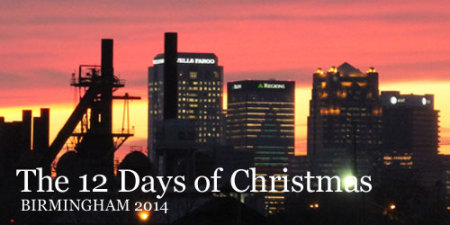
‘The 12 Days of Christmas,’ Birmingham 2014 edition

Saturday, December 6th, 2014
12 Days of Christmas - Birmingham 2014

Photo: Wally Argus (CC)

Celebrate the Yuletide with our special arrangement of “The 12 Days of Christmas,” Birmingham 2014 edition!

Sing along with accompaniment …

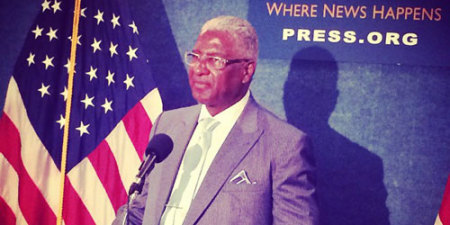
12 mayor’s junkets

William Bell

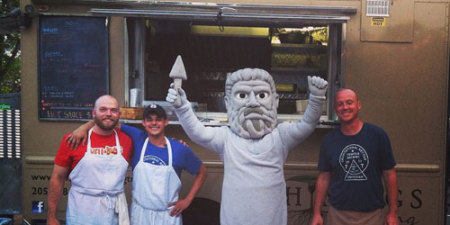
11 food trucks squatting

Shindigs Truck

10 ales-a-brewing

beer

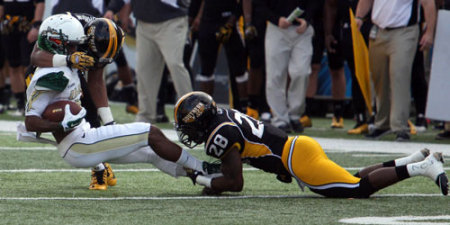
9 Blazers ambushed

UAB, Southern Miss

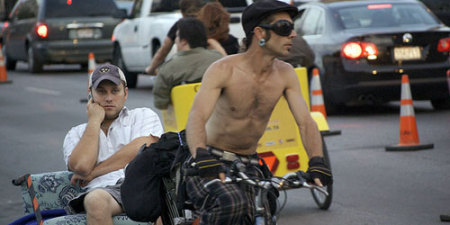
8 jitney Ubers

pedicab

Photo: Joey Parsons (CC)

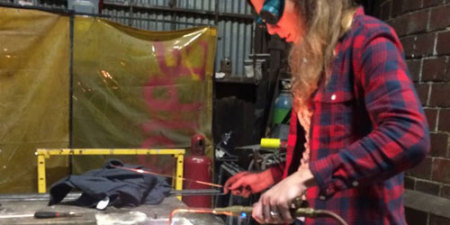
7 makerspaces

MakeBHM

6 schools-a-failing

Birmingham school

Photo: Joshua Crauswell (CC)

5 Spann alerts

James Spann

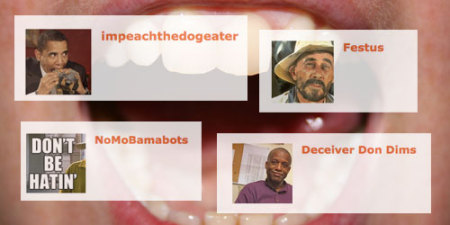
4 trolling hacks

trolling hacks

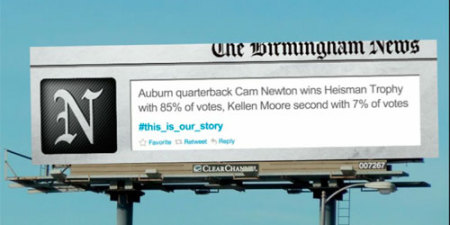
3 News days

Birmingham News Twitter billboard

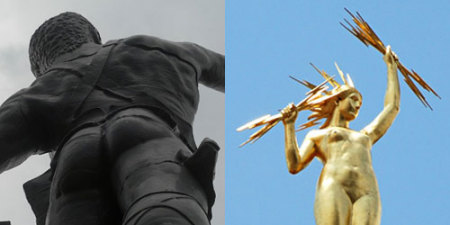
2 pagan gods

and a Pig Dog with a dumb name.

Pig dog

Alabama Theatre 2014 Holiday Film Series: the ultimate guide

Friday, December 5th, 2014

Alabama Theatre

The Alabama Theatre’s 2014 Holiday Film Series starts next week: 11 days, nine movies and a few cartoons. Plus, the Mighty Wurlitzer will lead the audience in Christmas carols before each screening.

Movies start at 7 p.m. unless otherwise noted.

All shows are $8, except “The Polar Express” which is $12 (fund-raiser for Kid One Transport; includes conductor’s hat, candy and photo with Santa). Tickets available online through Ticketmaster and at the door.

The Alabama Theatre is located at 1817 Third Ave. N., downtown [map]. For more information, visit the website or call (205) 252-2262.

White Christmas

Dec. 12 and Dec. 21 (2 p.m. matinee): Fred Astaire said no. Donald O’Connor dropped out because of Q fever (thanks, Francis the Mule!). So we got Danny Kaye. Oh, and Bing Crosby sings “White Christmas” in a movie for the third time, because … Bing.

The Polar Express

Dec. 13 (10 a.m. and 2 p.m. matinees): Creepy Tom Hanks is creepy.

Also, from 11:30 a.m. to 2 p.m., children can try out the hands-on modes of transportation exhibit outside.

It’s a Wonderful Life

Dec. 13 and Dec. 20: Shout out to the commenter who likened UAB’s dismantling to a “Pottersville-type vision.”

Miracle on 34th Street (1947)

Dec. 14 (2 p.m. matinee): Kris Kringle fails to produce his long-form birth certificate, but is saved when the President issues an executive order on illegal immigration.

Christmas Vacation

Dec. 15 and Dec. 22, plus Dec. 20 at midnight … and bonus screening on Dec. 23: Kids, National Lampoon totally used to be a thing. First a humor mag, then books, albums, radio shows, plays and movies. Marvel should totally do plays, by the way. “Iron Man 4: The Importance of Being Awesome.”

Home Alone

Dec. 16: Two entrepreneurs scrape by in a depressed economy, thwarted at every turn by a bratty, privileged suburban kid who expresses himself through lashing out.

Scrooged

Dec. 17: Every Christmas TV episode is either “A Christmas Carol” or “It’s a Wonderful Life” (I guess “The Gift of the Magi” has been retired). This is the best version of the former with Bill Murray.

Elf

Dec. 18 … and bonus screening on Dec. 21: The four main food groups — candy, candy canes, candy corns and syrup — were based on the actual FDA recommendations at the time in 2003.

A Christmas Story

Dec. 19: If you’re gonna watch the 24-hour cable marathon of this movie, you’re gonna need to warm up first.

Cartoons

Dec. 20 (2 p.m. matinee): A triple-feature …

  • “A Charlie Brown Christmas”: Can’t wait to see the big screen CGI remake of this (rolls eyes) …
  • “Rudolph the Red-Nosed Reindeer”: Bullies are the worst, y’all.
  • “How the Grinch Stole Christmas”: He dropped football, bowling and rifle.

Alabama Theatre

Green and gold and black and blue: On the murder of UAB sports

Wednesday, December 3rd, 2014

UAB Marshall

Blazer tight end Kennard Backman leaps as UAB faces
No. 18 Marshall in its final home game.

Author’s note: In the past, I have worked in my capacity as a communications consultant for the University of Alabama at Birmingham.

Summary: After the loss of its football program, UAB must fire its president and leave the UA system to avoid future calamity.

Dec. 2 would have been a news-filled day without the end of UAB football, and bowling, and rifle.

• Pat Sullivan, a beloved Auburn quarterback and 1972 Heisman winner, stepped down as Samford’s football coach after seven seasons. He turned around a program even as he battled health issues.

• Charles Krulak announced his retirement as president of Birmingham-Southern College, ending in May. His 4-year service brought about a remarkable turnaround for a school drowning in a surprise $67 million debt. Before coming to Birmingham, Krulak served as U.S. Marine Commandant general and MBNA vice president.

UAB would see its own share of departing coaches and a different kind of turnaround from its leader.

Dr. Ray Watts, barely 22 months into his tenure as president, has forged an ugly legacy. He has done so through his unwavering service to the University of Alabama system trustees, rather than UAB’s students and employees, not to mention Birmingham proper (that bothersome B in UAB).

Watts managed to murder UAB football, after a history of 23 years, a 117–150–2 record, plus one bowl game. Caught in the crossfire were UAB’s bowling and rifle teams. He pulled the trigger, and the board of trustees gave him the gun.

UAB is the only FBS school in 19 years to drop football; University of the Pacific ended its program in 1995. Twenty schools have added football or moved up to FBS in that period, including Troy (which welcomed a new coach Monday) and South Alabama (headed to the first Camellia Bowl, Dec. 20 in Montgomery).

His leadership has been laughably disastrous, and UAB should find a way to oust him as soon as possible.

Previously: Should UAB football continue?

Some saw the warning signs earlier. Justin Craft, a former UAB player and member of the UAB Football Foundation, sounded the alarm in a Nov. 5 letter. New coach Bill Clark, who would lead the team to a 6-6 record and a possible bowl game, wasn’t being considered for an extension on his paltry 3-year contract; no non-conference games beyond 2016 were being discussed.

Watts met with Craft on Halloween, but Craft said he received no definitive answers from Watts about the program’s future.

Watts’ public statement offered no hope, referring only to a consulting firm’s report (below) that would determine football’s fate.

Over at Samford, Sullivan leaves a hero as the all-time leader in victories and a string of winning seasons. Attendance hovered just under 5,000. The Bulldogs made the FCS playoffs in 2013, the first time in more than 20 years.

Clark pulled off his mini-turnaround in a single season without an on-campus stadium, without an indoor practice facility (Mayor Bell and the UAB Football Foundation offered to foot the $10 million bill), without the support of UAB’s top official.

In seeing a couple of UAB games over the years as a guest of the university, I remember talking with then-president Carol Garrison at the tailgate party. She has chatted up guests at the pre-game receptions, talked to the squad in the locker room and graced the luxury box at Legion Field.

Watts, to anyone’s knowledge, hasn’t been to any of this year’s six home games at rickety old Legion Field, where attendance more than doubled.

Video: UAB president Ray Watts meets the football team
(perhaps for the first time) to kill the program.

Samford, of course, is a private institution with autonomy and lower expectations in the FCS division. UAB is part of the UA system, represented on a board with only four UAB alumni out of 15 members (the rest UA alums), though UAB brings in three times the revenue.

On Saturday, UAB beat Southern Miss on the road for its sixth win, becoming bowl eligible for only the second the fourth time in program history. The Football Writers Association of America gave the Blazers its Big Game National Team of the Week award.

On Sunday, Sports Illustrated broke the story that UAB was about to dump football. Watts was silent, away on vacation in New York for Thanksgiving weekend.

On Monday, hundreds of student protestors marched to the administration building and demanded answers. Watts’ campus parking space was vacant. Watts, in hiding from his own students, offered a statement nearly identical to the one from a few weeks before.

On Tuesday, protestors again marched to the administration building. Watts could drag this out no longer, his office announcing a meeting with the football team at 2 p.m. and a media conference at 3:30. During the afternoon, the official word came by email: UAB would eliminate the football, bowling and rifle programs.

Watts emailed students. He didn’t announce it in person first to students. He emailed it. And not to alumni, even as student volunteers continued to place fund-raising calls for the $1 billion Campaign for UAB.

The school begs for money, but when alumni and the City of Birmingham offered millions of dollars, Watts said no.

Football was the real target. And it was an easy one: It loses money, as most FBS programs do. Even Auburn, which played for a national championship this year. He said as much during a closed meeting to a disbelieving group of players, who confronted him about his singular focus on the numbers.

When Watts tried to slip out the back door after that meeting, an angry mob of students shouted and lunged at him, pounding on the SUV taking him to the media conference. He needed an armed escort to make it to the vehicle.

Watts explained his position to the media, citing the consulting firm’s report that estimates UAB athletics’ spending at $100 million total over the next 5 years while mentioning the university’s cancer research.

He played the cancer card, even though research funding through grants isn’t the same as athletics revenue through conferences, television, licensing and donations.

CarrSports Consulting report for UAB on how to
cut football, 16 pages

CarrSports Consulting report for James Madison University
on how to move up to the FBS division, 65 pages

The report from CarrSports Consulting has been in the offing for months, even when Clark was hired as football coach in January. It’s less a consideration of the question of football and more a how-to guide on dropping football.

Title IX requires a balance of men’s and women’s sports in number and participation, so out go rifle and bowling’s all-female teams after football. In come men’s cross country and track to keep the university in NCAA Division I sports.

UAB will get the boot from Conference USA, which requires members to sponsor a football team. Ironically, the conference men’s and women’s basketball tournaments will take place March 11-14 at the BJCC Arena and on campus at Bartow Arena.

The financial intangibles muddy the picture, such as in enrollment, Blazer merchandise and donations.

Chuck Krulak has received accolades not only for his fund-raising at Birmingham-Southern, but his hands-on attitude, living in the dorms, eating daily in the cafeteria. Many alumni were justly concerned about the school’s financial malpractice, but he won them over in his first year by putting the college in the black for the first time in 7 years.

Krulak never took a salary during his 4 years on the job. Watts’ annual salary is $853,464, the 11th highest among American public universities. But Birmingham-Southern is a small, private college, one that resumed its Division III football program in 2007 after a 68-year hiatus. UAB has more faculty members than BSC has students.

In August, Krulak co-wrote an op-ed piece for the Chicago Tribune asking President Obama to force the military and CIA to come clean on the use of torture in Iraq. He shows courage and leadership in financial, practical and moral issues.

Watts demonstrates no such courage, no such knack for leadership. He displays no grasp of candor, no backbone, no vision for making the university and her students stronger and smarter.

He will drag UAB, Birmingham’s largest employer, into an abyss.

The first step is clear: My pal Steven E. Chappell named his new site FireRayWatts.com.

Don’t look for help from the UA board of trustees, which denies any involvement. The same board that approves all UAB athletic personnel contracts (bye bye, Jimbo Fisher) and nixed plans for an on-campus stadium in 2011. The same board that bows to the dictates of the overly influential trustee Paul Bryant Jr.

And don’t look for help from ex officio board member Gov. Bentley. Bryant donated $25,000 to his re-election campaign, as editor Jeff Poor noted.

Purge Watts, this sorry, gutless wonder, from campus as soon as possible.

The second step will be more difficult. Because none of this was really about football. It’s about self-determination.

UAB cannot function with absentee landlords, as reporter Kyle Whitmire notes in his al.com essay. He likens UAB to UA’s plantation, great for the masters and terrible for Birmingham. (As I would liken al.com/Birmingham News to Advance Digital’s plantation …)

Since Birmingham cannot hope to win over the trustees, it must wrest UAB from the UA system. Let the trustees bat around the Huntsville campus instead.

UAB must have autonomy or face the whims of an untrustworthy board, one that can and will make decisions that continue to damage the city’s crown jewel. What next … academics, research, the arts, new construction, housing? Imagine a worse successor as university president. Imagine fewer amenities to attract top professors, undergraduate applicants and research dollars.

Only a month ago, the suggestion of decimating UAB football would’ve seemed crazy.

It will take the authority of the Legislature to grant such a divorce from the UA system. Last week, Rep. Jack Williams proposed a bill to remake the board, but a far more drastic reshuffling is required.

The Blazers won’t play again in Birmingham, but if they’re very lucky, they might still go to a bowl game at 6-6. ESPN’s Brett McMurphy is alone in picking UAB for any bowl: the first Popeye’s Bahamas Bowl vs. Western Michigan on Christmas Eve.

It’s one last chance for those orphaned players and coach to shine before a national TV audience and perhaps find new schools that won’t lie to them and use them up for sport.

P.S. Columnist John Archibald writes an epitaph for UAB football: “In the end we lost again, because Birmingham did not support its own. … Support local sport. High schools and colleges …”

If only his employer, Alabama Media Group, had followed his advice, instead of giving the Blazers such inadequate coverage during the season …

• • •

  • Kevin Scarbinsky, al.com: “Ray Watts and his balance sheet kill UAB football, and strong men shed honest tears”
  • Jon Solomon, CBS Sports: “The day UAB football died a painful death”
  • New York Times: “It’s a Game of Spiraling Costs, So a College Tosses Out Football”
  • Kyle Whitmire, al.com: “The leader vs the lackey: UAB’s Ray Watts could learn a lot from BSC’s Charles Krulak”
  • John Archibald, al.com: “Evidence mounts that killing of UAB football was premeditated”

What are your thoughts on UAB, football, self-governance and the future? Share them in the comments.

German Christmas market coming Saturday to downtown

Tuesday, December 2nd, 2014

Das Haus, Weihnachtsmarkt

 The Weihnachtsmarkt will have vendors offering ornaments,
gifts and more for shoppers.

Das Haus will hold its fourth annual Weihnachtsmarkt. Based on a tradition dating back to the Middle Ages, this Christmas market will have arts and crafts, ornaments, trees and gifts.

Also available for sale are German beer, mulled wine or Glühwein, plus brats on buns, pretzels, potato pancakes or Kartoffelpuffer and pastries.

The day includes musical performances, children’s entertainers and a visit from Santa Claus.

The free event runs from 10 a.m. to 6 p.m. Saturday at Das Haus, 2318 Second Ave. N., downtown [map]. For more information, visit the Facebook event page or email fdskgermanclub@gmail.com.

Das Haus

The Birmingham channel: Culture after culture after culture

Monday, December 1st, 2014

A look at Birmingham in videos …

Sunday’s impromptu “Save UAB Football” rally on campus. From Ralph Marion.

Cystic Fibrosis Foundation holds its Birmingham’s Finest $100,00 fund-raiser at B and A Warehouse. Fromfrictionoflife.

WBMG (now WIAT) Action News Birmingham Nightdesk opening from 1989. From PrincessAriel2014.

Milow performs “Where My Head Used to Be” and “You and Me” back in June at the Red Cat Coffeehouse in Lakeview. From Afterhours: Live from The Red Cat Birmingham.

Flogging Molly’s Nov. 24 show at Iron City on Southside. From Sean Mahoney.

Birmingham’s Blazing Bhangra performs at UAB’s Nov. 15 Diwali celebration at the Alys Stephens Center. From UAB Indian Cultural Association.

Sharrif Simmons on Birmingham hip-hop. From al.com.

Christian singer Rachael Mann interviewed on WDJC (93.7 FM). From Rachael Mann.

Two suns in the sky. From rashid198029.

Easter 2014. From Patricia Muñoz.

Sharroky Hollie interviews Arnetta Streeter, who marched in Birmingham in 1963 as a girl. From Validate Affirm.

Augustana performs “Fire” in 2011. From Plateau 9 Productions.

Promo for Arc Light Stories’ events (and yes, I’m in this clip). From Arc Light Stories.

http://instagram.com/p/wCn0DqQBwK/

Sunday on the Trussville trails and the Horse Track Ditch. From Mark Leo.

See the Westover Christmas parade.

See a hamster’s holiday celebration.

See Rhodes Scholar Ameen Barghi talk about his upbringing.

• • •

Send us links to your videos. | More videos on the Birmingham channel.

Books: Excerpt from Chelsea Berler’s ‘The Curious One’

Sunday, November 30th, 2014

Chelsea Berler, The Curious One

The following chapter is an excerpt from Birmingham author Chelsea Berler’s autobiographical book, “The Curious One: From Food Stamps to CEO — One Woman’s Journey through Struggle, Tragedy, Success and Love” [aff. link]. She is the founder and the chief executive officer of the Solamar Agency, a marketing firm in North Shelby County.

Berler discusses a moment of revelation in working on taxes and growing her young company.

• • •

Introduction

“I’m not telling you it is going to be easy,
I’m telling you it’s going to be worth it.”

— Art Williams

The Big Moment came when I was doing my taxes. I know, figuring out what number you have to write on that check to Uncle Sam is not usually the most exciting time in a person’s life. But for me, it was a huge moment, one that had major significance.

It was about 2 years ago. I was 27 years old, and I’d been running my own business, Solamar Agency, for about 5 years.

One of my very dear friends was our financial guy (and still is). He’d been with us the whole time. Since the beginning. But when we started out, we were really, really small. So while he was taking care of all the financial stuff for me, I never really thought much about it.

In fact, because I was so focused on serving my clients and my team and putting one foot in front of the other and just doing my work, I never really paid all that much attention to the reports he sent me at the end of every month, year after year. You know, those profit-and-loss statements with the numbers on it that explained just how much money we were making every month?

But then I got that one, life-changing year-end report. And it said my company made about $500,000 that year.

Me. At 27. Just made half a million dollars.

Wait a second … how did this happen?

I sat there and kind of stared at the number on the report, like it would suddenly make perfect sense to me if I looked at it long and hard enough.

Or maybe the “5” would suddenly turn into a “2” … or some other, more reasonable, number that made more sense to me.

But that didn’t happen. It wasn’t going to happen. Because as I sat there staring at the paper, it started to sink in.

Maybe it did make sense. Maybe it really was possible.

I thought back over the years I’d been running my business. Basically, what I’d been doing was working my tail off. I was going through a lot — I’d gotten my second divorce (yes, at 24—more on that later …) and the way I dealt with it was just by working, working, working.

That was pretty much my coping mechanism for any sort of problem that might come up in my life. I worked my way through it. It gave me something positive to do that distracted me from whatever was making me feel crappy at the time.

Not like I was super-ambitious or some major planner. I wasn’t necessarily thinking about my goals, or where the business was going, or even if the business was going. For me, the simple fact that I was getting some money at the end of the month after making payroll and paying all the other bills was like, “This is great.”

Eventually, I got over the divorce and met an incredible man. But I kept on working. It was the way I defined myself.

And looking at that report, and at the giant, massive, very grownup number on it, I realized what had been sneaking up on me for years.

All that work had paid off. I really did have a real business.

This was a real thing.

Maybe the fact that, right around the same time, we had opened up our first physical office could have provided a clue. Some sort of “Hey, progress is being made here” kind of message. But I never really equated opening the office with “success.” It was more about my lifestyle. I had been a hermit for such a long time, sitting at my computer in my house working, that basically, I just wanted to get out of the house. I wanted to have a place to go to work, and people to talk to when I got there. I’d been hiring people virtually for years, but I had started hiring people locally. And I needed a place to put those people …

I never expected it all to add up to half a million dollars. But suddenly, I realized that I did it. It happened.

And it was a pretty amazing moment.

I was flooded with all these feelings.

I finally felt like I had made something of myself.

Like I was part of something bigger than me.

Like I wanted to tell everyone to screw off.

I felt real.

It was the last place people (especially those people I wanted to tell to screw off) expected to find me.

And that’s maybe the biggest reason the whole $500K thing freaked me out. I grew up knowing, or thinking I knew, a pretty depressing fact. That not everything is possible.

Pretty much the opposite of what you’re supposed to grow up knowing, right?

I grew up in a very small town in North Dakota, with very little money and even fewer possibilities. Not that there was (or is) anything wrong with the town or the people in it. They made me who I am today. I love North Dakota, and I’ll be forever grateful for my roots.

But it’s just the kind of town where everybody knows everybody, and you get married and you stay there and you have kids and your kids stay there and everybody stays there forever and ever and ever.

I never, ever thought I would see another state, or even get out of my little town.

I had no idea how that would even be possible.

They have this one, very specific life path they teach you in school to help you succeed.

  1. You go to high school.
  2. You go to college, usually an in-state school.
  3. You become a teacher, or a doctor, or a lawyer.
  4. You come home and work and raise your family there.

It’s a perfectly great plan for people who want to be doctors or lawyers or teachers.

But that just didn’t feel like me.

Of course, like in every town big and small, there are also the dropouts that don’t go to college; they don’t even stay in high school. So they don’t do anything with themselves except maybe sit at the local bar.

I didn’t see myself as one of those people either.

And then there are the people who don’t go to college, but just have a bunch of cute babies and stay home and live on a family farm.

That’s where I figured I fit in. I always assumed I was going to end up married with kids in my hometown. That’s what most people like me did. Or pretty much what all people like me did. How could I think I was going to be any different?

The problem was, deep down inside, I felt different.

There was a part of me that was always rebelling against “the way things were.” I had these vague dreams of “arriving,” although where I was going to arrive, I wasn’t quite sure. Or wishing and hoping that I could create something lasting, not that I had any idea what that would be.

I just knew that I wasn’t like everybody else.

And in my town, in my world, that wasn’t exactly a comforting feeling. I was scared as hell that I would fail, that I wouldn’t have anything to show for myself and wouldn’t be able to create anything at all.

But that didn’t stop me from having visions of something different. Something bigger.

I just didn’t know what it would be.

Now, 20 years or so later, I do. Which, I guess, is why I’m writing this book.

As I write this, 2 years after that moment with my tax forms, my business is hovering right under the million-dollar mark.

And because I have reached this level of success, before turning 30, suddenly, I’m getting noticed. Suddenly, people look at me and think things like, “Oh, she is smart.” Or, “Oh, she does have something going on.”

Which makes me laugh, because they didn’t always feel that way!

I was the girl that didn’t fit the mold. That didn’t follow the path. How was I ever supposed to be successful if I didn’t conform and do what I was supposed to do?

But here’s the more important point: Maybe you feel like that, too.

Because a lot of people do.

Maybe no one ever told you that there’s a bigger world out there, and that you can not only get out in it and see it and be a part of it, but actually add something to it.

I know no one told me. I had to figure that part out on my own.

So I’m here to tell you that you do have options. I was a person who was born into a life where there didn’t seem to be a lot of options. But I had them — they just weren’t immediately visible.

And you have them, too. You really do.

Living a life that fits you and makes you happy, leaving your mark on the world even if you don’t exactly know what that mark will be, is possible.

You don’t have to do it their way.

You just have to find your way.

People might tell you you’re crazy. They might say what you want isn’t possible. They may — and this hurts — even tell you they don’t believe in you.

It doesn’t matter.

As long as you stay curious, and stay thirsty for more, and keep trying new things and reaching for new experiences, anything is possible. I know it is. Not only have I lived it, but I’m still living it today.

Sure, there are times when I think that I could lead an easier life: I could stop running all over the country, hang out with my husband and just have fun and relax. Maybe someday I will. But right now, I want more for myself.

And I also want more for people that haven’t had that opportunity to be curious.

Because if all this could happen for a girl from Scranton, N.D., it can happen to you, too.

Are you curious? Then come with me …

• • •

Chelsea Berler will hold a book signing for “The Curious One” from 2 to 4 p.m. Dec. 14 at 2nd and Charles, 1705 Montgomery Highway, Hoover [map].

“The Curious One” (March 2014, self-published)

Chelsea Berler

Four Birmingham teams headed to state championships in Auburn

Friday, November 28th, 2014

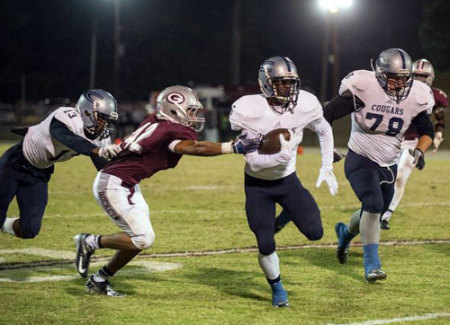
Hoover, Clay-Chalkville, Pleasant Grove and Leeds have one final game next week

Clay-Chalkville beat Gardendale in the regular season on the
way to a perfect record and a 6A title fight against Saraland
next week.

In a football-crazed state, why not more football?

The 3-day binge of high school championships has expanded with two more games. The Alabama High School Athletic Association changed to a seven-classification system in January, sending the state’s 32 largest schools to 7A.

The Birmingham-area teams competing for state titles are Hoover, Clay-Chalkville, Pleasant Grove and Leeds. Hoover faces Prattville for the first 7A championship; the two teams won 11 of the last 12 6A titles.

Clay-Chalkville won the 6A title in 1999; the Cougars face Saraland making its first trip to the finals. Pleasant Grove also makes its first trip to the 5A finals, taking on St. Paul’s, which won the title in 2007. Leeds won the 3A title twice before moving up to 4A; the Green Wave faces three-time 4A champs Deshler.

The seven championship matches will kick off with an exhibition flag football game between Hewitt-Trussville and Lawrence County. The Unified Sports program, part of Special Olympics, puts students with mental disabilities with other athletes for competition and fun. The Alabama Special Olympics is helping put on the Wednesday afternoon game.

All Super Seven games take place Wednesday through Dec. 5 at Auburn’s Jordan-Hare Stadium, airing on Fox 6.1 and 6.2 and streaming online. Tickets are $12 per day and available online.

Wednesday

  • 3:30 p.m.: Exhibition flag football: Hewitt-Trussville vs. Lawrence County
  • 7 p.m.: Class 7A – Prattville (11-2) vs. Hoover (11-2)

Thursday

  • 11 a.m.: Class 3A – Dale County (14-0) vs. Madison Academy (13-1)
  • 3 p.m.: Class 1A – Maplesville (13-0) vs. Hubbertville (13-0)
  • 7 p.m.: Class 5A – St. Paul’s (14-0) vs. Pleasant Grove (12-2)

Dec. 5

  • 11 a.m.: Class 4A – Leeds (13-1) vs. Deshler (12-1)
  • 3 p.m.: Class 2A – Elba (14-0) vs. Fyffe (14-0)
  • 7 p.m.: Class 6A – Clay-Chalkville (14-0) vs. Saraland (13-1)

Super 7 / AHSAA

Christmas 2014: parades and tree lightings across Birmingham

Friday, November 28th, 2014

Squirrel - Homewood Christmas parade

This festive squirrel rides his motorcycle at
the annual Homewood Christmas parade.

Christmas parades and tree lightings will take place in more than two dozen cities across Jefferson and Shelby Counties. Take a look at the list to join in the free festivities …

Alabaster: parade with Noah Galloway as grand marshal, 10 a.m. Dec. 6, starts near Ernest McCarty Ford, 1471 First St. N. [map]

Bessemer: parade, 2 p.m. Dec. 13, starts at Debardeleben Park [map]

Birmingham: parade and tree lighting, 5-7 p.m. Tuesday; parade starts at Kelly Ingram Park [map], tree lighting at Linn Park [map]

Calera: parade, 6 p.m. Dec. 6, starts at National Guard, 1320 Eighth Ave. [map]

Center Point: parade, 11 a.m. Dec. 13, starts at Cathedral of the Cross, 1480 Center Point Pkwy. [map]

Chelsea: parade, 10 a.m. Dec. 20, starts at Chelsea Middle School, 2321 Shelby County 39 [map]

Clay: tree lighting, 5:30 p.m. Sunday at Cosby Lake Park [map]; parade, 3:30 p.m. Dec. 13, starts at Clay-Chalkville High School, 6623 Roe Chandler Road [map]

Columbiana: parade and tree lighting, 5:30 p.m. Thursday; parade starts at 7 p.m. at Main Street [map]

Gardendale: parade and tree lighting, 6-9 p.m. Thursday, starts at Mt. Olive Road [map]

Graysville: tree lighting, 6 p.m. Thursday at City Hall, 246 S. Main St. [map]; parade, 10 a.m. Dec. 6, starts at North Main Street [map]

Helena: parade, 1 p.m. Dec. 6, starts at Helena Road [map]

Hoover: tree lighting, 5 p.m. Monday, City Hall, 100 Municipal Ln. [map]

Homewood: parade and tree lighting, 6 p.m. Dec. 9, City Hall, 2850 19th St. S. [map]; parade starts at 6:30 p.m. from the library, 1721 Oxmoor Road [map], then tree lighting at City Hall plaza

Irondale: parade and tree lighting, 11 a.m.-1 p.m. Dec. 6, starts at Irondale Elementary School, 225 S. 16th St., ends with tree lighting at City Hall, 101 20th St. S. [map]

Leeds: parade, 7 p.m. Dec. 12, through downtown [map]

Midfield: parade and tree lighting, 10 a.m. Dec. 6, starts at Midfield Community Center [map]

Moody: parade, 5 p.m. Dec. 13, starts at Adesa, 804 Sollie Drive [map]

Mountain Brook: parade, 3 p.m. Dec. 7, starts at Cahaba Road in Mountain Brook Village [map]

Pelham: tree lighting, 6:30 p.m. Monday, Pelham Civic Complex, 500 Amphitheater Road [map]

Pinson: parade, 10 a.m. Dec. 6, starts at Pinson Valley High School, 6895 Alabama 75 [map]

Pleasant Grove: tree lighting, 7 p.m. Thursday at City Hall, 501 Park Road [map]; parade, 9-11 a.m. Dec. 6, starts at CVS, 27 Park Road [map]

Trussville: parade and tree lighting, 3 p.m. Dec. 13, starts at Parkway Drive and Oak Street [map]

Vestavia Hills: tree lighting, 6-8 p.m. Dec 9, Vestavia Hills City Center, 700 Montgomery Highway [map]; parade, 2-4 p.m. Dec. 14, starts at Liberty Park Sports Complex, 4700 Sicard Hollow Road [map]

Vincent: parade, 6-8 p.m. Thursday, starts at Vincent Middle High School, 42505 Shelby County 25 [map]

Westover: parade, 10 a.m. Dec. 13, along Old U.S. 280 [map]

Wilton: parade, 10 a.m. Dec. 6, starts at Bible Baptist Church, 293 Stephens St. [map]

Video: Westover Christmas parade

Did we miss your town’s parade? Let us know in the comments.

Q&A with UAB’s Rhodes Scholar Ameen Barghi

Wednesday, November 26th, 2014

Among the 32 Rhodes Scholars from the United States announced Monday was a UAB senior.

Ameen BarghiBirmingham’s Ameen Barghi will be part of the Class of 2015 spending the fall semester at the University of Oxford. A pool of 877 students applied for the scholarships. The Rhodes Trust picks 83 students from around the world each year.

UAB’s Neelaksh Varshney was a Rhodes Scholar in 2000 and Joshua Carpenter in 2012.

Barghi, 22, attended Oak Mountain High School. During his sophomore year there, he also volunteered at UAB Hospital.

His accomplishments include early admittance to UAB Medical School, enrollment in UAB Honors College’s Science and Technology Honors Program and the Collat School of Business Honors Program. He is a double major in neuroscience focusing on translational research.

Oh, and he has a 4.0 GPA.

Barghi answered a few questions by email before Thanksgiving break.

What are you looking forward to most next fall at Oxford?

Being around students who will be equally or more intellectually curious as myself. I’m really excited to be able to train at one of the oldest institutions in the world that still maintains a standard of academic excellence.

I read that you want to earn a medical degree and a doctoral degree. Do you plan to practice medicine, do research, a combination or something else?

It will definitely be a combination of patient care and research.

Why do you think the Rhodes committee selected you among hundreds of applicants?

Though all of the interviewees were exceptionally qualified, I think I may have just been the most passionate that day. It’s really a test of nerve, endurance and passion.

Where had you looked at for college, and what led you to UAB?

I looked at some state schools, considered a couple of the New England schools, but ultimately picked UAB for financial and academic reasons. I was accepted into their Early Medical School Acceptance Program (which guaranteed my spot at their medical school), so I had more leeway as an undergraduate.

What is the next big goal you’d like to accomplish?

My next big goal is to be able to experience as much as I can during my time at Oxford!

Video: 280 Living interview with Ameen Barghi

Ameen Barghi

The Birmingham channel: Making it in the Magic City

Monday, November 24th, 2014

A look at Birmingham in videos …

“The Fat Man,” by Foxxy Fatts and Company. Fatts, who died last week, was a Birmingham drummer and member of the Alabama Jazz Hall of Fame. From Rendell Eccleston.

Tim Alexander, former UAB player, address the Birmingham city council about saving the football program. From First Missionary Baptist Church.

Made in the Magic City promo for its $30,000 Kickstarter fund-raiser to make documentary films. From Ryan Kindahl.

Students and faculty share message of individuality. From Muscle Shoals Middle School.

Freestylin’. From ahagood44.

Postal workers’ protest at the downtown post office. From al.com.

Highlight reel for Briarwood Christian’s quarterback William Gray. From Brad Gray.

Driving through the streets of Birmingham. From Storm.

The Red Bus Project stops by UAB to raise money for orphans. From redbusproject.

“Love, Me” by Max T. Barnes at Iron City. From Warren Callaway.

At the Blackberry Smoke show at the Alabama Theatre: “2 girls that had been sitting next to me ran up on stage.” From dave911.

Girl Scout Troop 600 collecting new items for nonprofit group Three Hots and a Cot. From Kari Whitaker.

French hip-hop dancer Laurent Bourgeois of Les Twins leads a class at the YMCA Youth Center downtown. From selinay seven.

The first U.S. bachelor herd of African elephants. From the Birmingham Zoo.


http://instagram.com/p/vui8UFuXde/

“Just because my family is shooting a fireworks show at The Club tonight. And it still gets my adrenaline going knowing what kind of work the crew put in today to make this happen. I was standing in my bedroom watching.” From lisamgray818.

http://instagram.com/p/vtYMdgRxwx/

Brooksy on the swing. From bicycler4life.

See a trailer for the music documentary “Muscle Shoals.”

See dogs audition for “The Mutt-cracker.”

• • •

Send us links to your videos. | More videos on the Birmingham channel.

Books: Excerpt from Carrie Rollwagen’s ‘The Localist’

Sunday, November 23rd, 2014
Carrie Rollwagen, The Localist

Photo: Cary Norton

The following chapter is an excerpt from Birmingham author Carrie Rollwagen’s new book, “The Localist” [aff. link]. She is co-owner of Church Street Coffee and Books, a copywriter and fellow blogger. I featured my friend Carrie in my first book, “The Social Media Stars of Birmingham.”

She discusses the new economic reality, the power of corporations and the importance of shopping locally.

• • •

Neon Jelly Bracelets, Big Hair and the American Dream

I’m a child of the ’80s, and as a kid, I really bought into everything the decade stood for: the commercialism and capitalism and neon, but also this crystallization of the American Dream, this sense that things could keep getting better and people would keep getting richer, and the only thing I had to do to be part of that success was to keep striving and fighting and working hard.

I started giving up on unlimited financial success a few years ago for religious reasons (Jesus would’ve made a terrible stockbroker), but anyone who didn’t have that same epiphany was forced out of their Reagan goggles anyway when our national — and global — economy collapsed. We haven’t hit Depression and Dust Bowl levels of poverty, but we aren’t doing so great either. Lots of people lost their jobs and couldn’t find new ones. Lots of people had to downsize and give up their houses and cars and dreams when their credit collapsed. Lots of people worked really hard and gave their bootstraps a really good tug and landed on the wrong side of a welfare line anyway.

News outlets love to broadcast about the financial meltdown, and bloggers like to write about how they’re affected by it. Every generation seems to think it’s got the best claim on being the worst treated by the economic collapse: The Greatest Generation saw its pensions and investments disappear. Baby boomers expect to lose social security and say goodbye to early retirement. Generations X and Y can’t advance in our jobs and don’t know what to do if we lose them. And Millennials grew up expecting financial security that may never materialize. We all have valid reasons for feeling tricked. But maybe it’s time we stopped feeling sorry for ourselves.

The financial collapse wasn’t something most of us, regardless of generation, expected. But maybe we should have. Economic systems naturally rise and fall, and it’s never wise to think their positive momentum will continue forever. For some reason, we all ignored that, and we set up our lives as if we’d only get more prosperous and hard times would never come and we’d become progressively richer and happier forever. We were living our lives like we were in an ’80s music video, where the music was loud and the hair was big and the bad times would be as short as the skirts. It’s a lot of fun to think that way. It’s why I liked to think that way as a little kid.

But maybe it’s time we grow up. Maybe we should admit to ourselves that life is full of ups and downs and to start looking at prosperity, at least partially, as a chance to save up for hard times ahead. We’ve been trained to think growing up is the worst thing of all, but I’m thinking maybe it isn’t. Acting like an adult can suck, but it can also be really exciting and freeing. It can also help us mature into people that we like being, developing personalities and economies that grow out of our choices instead of the choices that are made for us. Being less naïve and selfish with our finances and, instead, opening our eyes for the good of our community, and even our country, might just make our lives better, safer, and more of a stable place to land. Is creating that kind of world, that kind of economy, a lot of responsibility? Sure. But it could also be pretty incredible.

The things we dreamt about in the ’80s aren’t necessarily naïve or unreasonable (okay, maybe flying cars were). In general, it’s okay to want prosperity for our country. It’s okay to hope our government can provide for things like building interstates and defending us in a war. It’s understandable to want good, safe neighborhoods for our kids to grow up in. And it’s okay to be patriotic, to want a strong nation. But to do that, we need money in our budgets, both local and national. We need an economic system that rewards innovation and creativity. We need to understand what our money does, and how it can help.

It’s no wonder we have a tough time grasping these issues of global finance and macroeconomics when we don’t even have a clear understanding of microeconomics, or even of personal finance. We know how to spend money, but that’s about where our comprehension ends. Most of us don’t even see a real connection between how much we earn and how much we spend — hence our dependence on credit — so how can we be expected to have a grasp on higher economics and how they effect our communities, our states or our country? The good news is, these issues aren’t really complicated; the math involved is pretty much on the elementary school level: The more money we give our local shops, the more we keep in our communities; and the more we give big box stores, the more we lose. The way we spend our money makes a difference. It’s our right, and maybe our responsibility, to be sure we spend it well.

What Came First, the Chicken or the Boycott?

Some families aren’t allowed to talk about religion and politics at the dinner table, but in my house we weren’t encouraged to talk about much else. (I’m guessing that’s unsurprising if you’ve read this far.) We were like the Kennedys, if the Kennedys were working class Midwesterners who quoted Bible verses instead of philosophers. My dad felt that important subjects were the only ones worth talking about, so politics and religion were at the top of his conversation list. Dad might not be the most inoffensive choice for a dinner party invite, but he’s right about one thing: At its root, politics is personal. Our laws and lawmakers effect real people every day, and the fact that we see politics as more of a sport or a circus is both a symptom of our political mess and part of the problem itself.

Maybe we can’t stop corporations from becoming a part of our political process, but we can “vote” with our money when we agree or disagree with what they do. When we know a company treats its workers badly or supports a cause we’re against, we have a responsibility to stop buying from them. Hobby Lobby and Chick-fil-A have a few things in common: They’re both owned by Christians, they’re both closed on Sundays, and they’ve both been boycotted in the last couple of years, not for closing on Sundays (although I’ve known some waffle fry devotees who’ve gone almost that far), but for putting money and company policy behind controversial political issues.

Hobby Lobby sued to win the right to avoid funding certain types of birth control (particularly the types which the company’s leadership feel are not contraception but early abortion) for their employees. Chick-fil-A executives were shown to be funding organizations that created and distributed anti-gay propaganda. The Chick-fil-A story is so interesting not just because of the boycott that started when people found out that the nugget money was going toward “re-education,” but also because of the “buy-cott” that sprung up in response when Chick-fil-A supporters headed to the fast food restaurant in droves to prove through purchasing that they supported Chick-fil-A and its chosen stance.

The issues at play in the Hobby Lobby and Chick-fil-A examples — abortion, contraception and gay rights — are complex and polarizing. What’s clear is, when we spend money at these businesses, we’re supporting more than crochet supplies, glue guns and chicken biscuits. When we buy things we’re putting money behind the causes the business supports. That means we have an obligation to use our purchasing power to support the things we believe in and to withhold our money from companies that we disagree with. Treating individuals (or corporations) who exercise their free speech differently is not the job of the government — but it is our job as citizens and as consumers. If you’re pro-choice, it’s hypocritical to buy yarn from Hobby Lobby, and if you support gay rights, it’s best to learn to live without the waffle fries. That’s how we exercise our free speech as individuals. That’s how we send messages to the companies we do business with — in the language of money, the only language they understand.

‘We have an obligation to use
our purchasing power to support
the things we believe in and to
withhold our money from
companies that we disagree with.’

This goes beyond companies who take religious or political stances. We can also financially punish companies that engage in deceptive practices, that treat their employees badly, that serve food they know is unhealthy. When we disagree, it makes sense to boycott a certain company and its parent corporation.

Sometimes, of course, this is easier said than done. It may not be practical (or even possible) to boycott huge companies like Kraft or Apple or to avoid repeat offender Monsanto. When we take stands like this, it can feel like we’re throwing pebbles at a giant without even having a decent slingshot on our side. (All our slingshots are made of cheap plastic in China now, so they’re not likely to stand up to a good giant-slaying anyway.) But this idea that our purchases don’t matter is just a lie. Even the small spending is meaningful. Even the waffle fries make a difference. We may not be able to avoid buying from big box stores or from offensive corporations all of the time, but that doesn’t mean that we shouldn’t avoid buying from them when we know about their abuses. Big corporations have the power to destroy other people, to influence public policy, and to put local shops out of business only because we don’t speak out against them, either with our speech or with our money. That silence is hurting us, and it’s a problem we have the power to stop.

Corporations Are(n’t) People, Too: Politics, Power and Personhood

Some people say Americans have loud mouths. (By some people, I mean the rest of the world.) Freedom of speech is pretty important to us, and we exercise it often, both for big and important things like political debates and for silly things like blogging about the Kardashians. With few restrictions, we can pretty much say whatever we want. Ideally, we combine our freedom of speech with the responsibility to use it wisely, but even when we don’t, we’re still protected. Our liberty makes us annoying sometimes, but it also makes us powerful and free.

Unfortunately, our Supreme Court has cheapened our freedom of speech with a bad decision in the Citizens United case, allowing corporations to give money to political candidates in the name of free speech. This ruling manages to slap us twice, equating corporations with people and giving money the same considerations as speech. Now the battle for what’s important about our humanity is being fought, not just in the corporate boardroom, but in the courtroom as well. Somehow, the same court that can’t decide conclusively when a fetus becomes a person has decided to give Fortune 500 companies that title.

Treating corporations as people and money as speech is more than creepy. (Although it certainly is that — clearly, the justices don’t read science fiction, or they’d know that personifying inanimate objects and monetary systems leads to some pretty nasty business.) Equating a business to a human life cheapens our humanity. This isn’t just semantics: Elevating a business to the level of a person sends the message that corporate needs are just as important as a person’s, and they certainly are not.

Corporations are not people. They don’t breathe, love, create or feel. We should reject Citizens United not just because of common sense, but also because corporate decisions are made, not with reason, but with money. Publicly traded corporations are legally obligated to report to and to produce profits for their shareholders. The system is rigged at its foundation to favor money above all, and a system like that shouldn’t have a voice in our political process. Money may be the language that corporations speak, but equating it with actual, literal speech and giving it the same freedoms is dangerous. It sets us up to be a country where people who have wealth have more voice, are more likely to be listened to, and are more likely to be taken seriously. That’s exactly the kind of country our founders escaped and tried to avoid becoming. We should not let the “we the people” that’s so important and unique to us to be turned into “we, the Walmarts and the Microsofts and the Amazons.”

When the government decided certain entities were too big to fail, they also made them seem too protected to be opposed by consumers. This led to an outpouring of rage known as the Occupy Wall Street movement, which saw people camping out for weeks in protest of big banks and big business. It’s easy to see what attracted these protesters, and it’s not just the Woodstock-like mix of anarchy, peace and love that seemed to develop through the weeks.

Our system, to put it mildly, is pretty messed up, and corporations gaining political influence without public transparency through the political action committees protected by Citizens United is just the beginning: Big money strong-arms our political system to the point that our individual voices feel irrelevant, and banks and corporations are not held accountable for the laws they break or the lives they destroy. Corporations inexplicably avoid prosecution when they hire illegal and immigrant labor, but individual families of immigrants seeking the American dream are torn apart and punished for our demand for cheap products and cheap labor. And a nationwide recession left almost every family struggling to get by.

On its own, shopping small won’t solve our most complicated political problems, but it might bring us closer together as communities, and it’s likely that unity would raise the current level of political discourse, creating a more civilized conversation that would help us find better solutions to our problems. Shopping locally would empower us and put more money into our local governments. It might just make us a more thoughtful people: a people who understand more about our communities. And that could put us in a better position for solving our problems and for building a better country.

The Citizens United ruling attacks America, it undermines what it means to be an American, and it chips away at our very humanity. But we can still make a stand, and we don’t even need to hang out on sidewalks with picket signs to do it. Wall Street has our money because we give it to them, and that’s something we can stop, or at least slow down, immediately. To really change Wall Street, we have to stop occupying Walmart. With our money, we can tell businesses that being a person — a real one — still matters.

• • •

Carrie Rollwagen will hold a book signing for “The Localist” from 10 a.m. to noon Saturday at Church Street Coffee and Books, 81 Church St., Mountain Book [map]. She will have giveaways to mark the book’s debut and Shop Small Saturday.

She will have a book launch party from 6 to 9 p.m. at the Nest, 130 41st St. S., Ste. 101, Avondale [map]. The event will include free beer from Avondale Brewing Company.

For more information, visit Carrie’s events page.

“The Localist” (Nov. 2014, self-published)

Carrie Rollwagen

Thread alert: Best Birmingham T-shirts

Friday, November 21st, 2014

I love the recent crop of Birmingham-themed T-shirts. Maybe you need something to wear in early 30-degree weather. Or a cheap Christmas gift that doesn’t require braving Black Friday or Mauve Thanksgiving or Vermillion Wednesday.

Please note that I have no innate fashion sense, and that the tees are not listed in any particular order.

Birming ham T-shirt

Birming ham T-shirt

Birmingham = Birming + ham, by Brantoe
$23.40 from Redbubble

Birdmingham T-shirt

Birdmingham T-shirt

Birdmingham, by Brantoe
$23.40 from Redbubble

See more designs from Brantoe.

B ham T-shirt

Left, Vintage 1871 B’ham tee, $24 from Original B’ham;
right, white Original B’ham classic tee, $20 from Original B’ham.

I heart B ham T-shirt

I ❤ B’ham – ladies’ tee
$24 from Original B’ham

See more designs from Original B’ham.

Red Mountain iron ore T-shirt

Red Mountain iron ore sign
$24.95 from Big City Brand

Birmingham Bulls T-shirt

Birmingham Bulls
$24.95 from Big City Brand

Legion Field T-shirt

Legion Field
$24.95 from Big City Brand

See more designs from Big City Brand.

Lyric Theatre T-shirt

Lyric Theatre
$20 from Yellowhammer Creative

Birmingham Mountain Radio T-shirt

Birmingham Mountain Radio
$20 from Yellowhammer Creative

Made in the Magic City T-shirt

Made in the Magic City
$20 from Yellowhammer Creative

See more designs from Yellowhammer Creative.

It's nice to have you in Birmingham T-shirt

It’s nice to have you in Birmingham
$24 from Alabama Goods

See more designs from Alabama Goods.

Sweet Tea T-shirt

Sweet Tea T-shirt

Original Southern Sweet Tea Shirt
$19 from Earth Creations

Southern Wonders of the World T-shirt

Southern Wonders of the World T-shirt

Southern Wonders of the World
$19 from Earth Creations

See more designs from Earth Creations.

Sweet Home Alabama T-shirt

Sweet Home Alabama
$18 from Bourbon and Boots

See more designs from Bourbon and Boots.

Birmingham pig T-shirt

Birmingham pig T-shirt

Birming-HAM, by NuzzoCollective
$23.40 from Redbubble

See more designs from NuzzoCollective.

Sloths Furnace

Sloths Furnace, by AllanDoodles
$20 from Etsy

And because I couldn’t resist …

B Town Birmingham More Magic Than Ever T-shirt

B Town Birmingham More Magic Than Ever T-shirt

B Town: Birmingham, More Magic Than Ever
$18.95 from TruckerTeez

 •

Added Nov. 25:

Birmingham the Magic City T-shirt

Birmingham the Magic City
$20 from Humphries Screen Printing and Design

See more designs from Humphries Screen Printing and Design.

Did I leave out your favorite? Let me know in the comments.

Three-and-a-half Nutcrackers

Thursday, November 20th, 2014

Video: Dog auditions for “The Mutt-cracker” at Birmingham Ballet

Three dance companies are taking the stage with their variations on holiday classic “The Nutcracker” for Birmingham audiences … 

• The “Great Russian Nutcracker” from the Moscow Ballet jetés into town tonight. Two dancers form the Dove of Peace with a 20-foot wingspan; other characters include 10-foot-tall silk puppets and lifesize nesting dolls. Showtime is 7 at the Alabama Theatre downtown. Tickets are $38.60-$81.50 and available through Ticketmaster.

• Birmingham Ballet has its “Nutcracker,” too, but with an opening night twist. In addition to performances on Dec. 13 and 14, the company presents “The Mutt-cracker” on Dec. 12. Some two dozen dogs take the stage alongside humans for this special production; proceeds for that night benefit the Greater Birmingham Humane Society. BJCC Concert Hall downtown. Tickets for all performances are $27.85-$54.75 and available online.

• The Alabama Ballet offers two weekends of “George Balanchine’s The Nutcracker” at Samford University. The company is one of seven worldwide with the rights to perform this version. Audiences can shop for nutcrackers before the show and during intermission. Dec. 12-14 and 19-21 at Samford’s Wright Center. Tickets are $25-$55 and available online.

The Mutt-cracker, Birmingham Ballet

Dancers, two-legged and four-legged, take the stage
in Birmingham Ballet’s “The Mutt-cracker.”

Friday’s Fall Festivale pouring it on at Regions Field

Thursday, November 20th, 2014

Fall Festivale

Fall Festivale offers dozens of beers for attendees to sample.

Beer lovers have a new venue for sampling old favorites and new flavors: Regions Field.

The fourth annual Fall Festivale returns Friday with beers from 32 breweries, including half from Alabama. The list includes:

  • A porter (firkin with cinnamon and chocolate) from Avondale Brewing Company;
  • Oktoberfest from Cahaba Brewing Company;
  • El Gordo from Good People Brewing Company; and
  • Nilbog (American barley wine) from TrimTab Brewing Company.

The event runs from 7 to 11 p.m. at Regions Field [map].

Tickets are $29, $39 at the door, and available online (free for designated drivers). Admission includes six pours and a souvenir glass. Free the Hops, a statewide nonprofit beer advocacy group based in Birmingham, is holding the event.

For more information, visit the festival website.

Fall Festivale

Admission includes six pours and a souvenir glass.

Fall Festivale