mama always said
Sunday, January 11th, 2015Look before crossing
the street. Mind your manners. Eat
all your vegetables.
• • •
Read more haiku.
 Subscribe via RSS to Wade’s Daily Haiku. Or have it delivered daily by e-mail.

Look before crossing
the street. Mind your manners. Eat
all your vegetables.
• • •
Read more haiku.
Subscribe via RSS to Wade’s Daily Haiku. Or have it delivered daily by e-mail.
Foolish spending and
aspirational facades
in all their glory.
• • •
Read more haiku.
Subscribe via RSS to Wade’s Daily Haiku. Or have it delivered daily by e-mail.

Andy Warhol’s screen print “Vote McGovern” is prepared
for exhibition. It’s part of “Warhol: Fabricated,”
opening tonight at UAB.
UAB’s new AEIVA features an exhibit opening tonight by one of the foremost modern American artists.
“Warhol: Fabricated” has nine screen prints and 120 photos from Andy Warhol showing his impact in various media and on the artistic landscape.
Two free events kick off the 2-month exhibit at the Abroms-Engel Institute for the Visual Arts:
The university has received a number of Warhol works over the years. The show features those pieces, along with loaners from the Andy Warhol Museum, the Booth Western Art Museum, the Birmingham Museum of Art, Beta Pictoris and private collectors.
AEIVA is open from 10 a.m. to 6 p.m. weekdays and from noon to 6 p.m. Saturdays. Admission is free.
The institute is located at 1221 10th Ave. S., Southside [map]. For more information, visit the event page or contact AEIVA@uab.edu or (205) 975-6436.

Photo: Jack Mitchell (CC)
AEIVA
Misery, with a
steady riff and many lost
dogs, plus loves gone bad.
• • •
Read more haiku.
Subscribe via RSS to Wade’s Daily Haiku. Or have it delivered daily by e-mail.
Oh, dripping faucet,
how you vex me … except when
the temps are freezing.
• • •
Read more haiku.
Subscribe via RSS to Wade’s Daily Haiku. Or have it delivered daily by e-mail.
All the anti-germ
soap and helmets in the world
couldn’t stop the beat.
• • •
Read more haiku.
Subscribe via RSS to Wade’s Daily Haiku. Or have it delivered daily by e-mail.
Separate or hide,
mask or protect, decorate
or drape. Curtain doom.
• • •
Read more haiku.
Subscribe via RSS to Wade’s Daily Haiku. Or have it delivered daily by e-mail.
A look at Birmingham in videos …
“Love Don’t Die” by the Fray, covered by Stormie Leigh. From Stormie Leigh.
•
Skateboarding in Birmingham and Tallahassee. From Southern Legacy.
•
“Fresh Grown” by Anna Lloyd, on healthy eating. From UAB Documentary.
•
Sloss Furnaces. From Sir Stricklin.
•
Going to the Birmingham Zoo in 1964. From Patricia Anne Rhodes.
•
Southern All Stars Asphalt Series: Early Bird 100 at the Birmingham International Raceway around 1990. From bubba35741.
•
Baton Rouge rapper Kevin Gates at Club Rain in Hoover. From iGotTheDirt.
•
You wanted 20 minutes of motorcycle-cam to Birmingham, right? From Matthew Horne.
•
Ferragamo Frost’s mixtape release party at Club Rain in Hoover. From Breakin Bread Records.
•
Birmingham Bowl: The Florida Gators go bowling at Vestavia Bowl. From Florida Gators.
•
Birmingham Bowl: The East Carolina Pirates visit the Birmingham Civil Rights Institute. From ECU Athletics.
•
Birmingham Bowl: game highlights. From Saturday Down South.
•
The East Lake Initiative. From Christ Church Birmingham.
•
Nowhere Squares’ video for “Too Stuck Up,” directed by Paul Cordes Wilm. From Step Pepper Records.
•
Light Dreams at the Alys Stephens Center on Southside. From Randal Crow.
•
Red-shouldered hawk has lunch. From Alabama Wildlife Center.
•
http://instagram.com/p/xbr9bhwxxb/
Chandrel boxes. From Wayne Heard.
•
http://instagram.com/p/xaUKcdx6Mn/
Spinning at the McWane Science Center. From Amanda.
•
See Emmylou Harris in concert.
•
See folk dancing at one of Birmingham’s most popular food festivals.
• • •
Send us links to your videos. | More videos on the Birmingham channel.
It is coming, this
true winter, this merciless
paralyzing storm.
• • •
Read more haiku.
Subscribe via RSS to Wade’s Daily Haiku. Or have it delivered daily by e-mail.
Sometimes, a flopping
fish gasping for oxygen.
Sometimes, near stillness.
• • •
Read more haiku.
Subscribe via RSS to Wade’s Daily Haiku. Or have it delivered daily by e-mail.
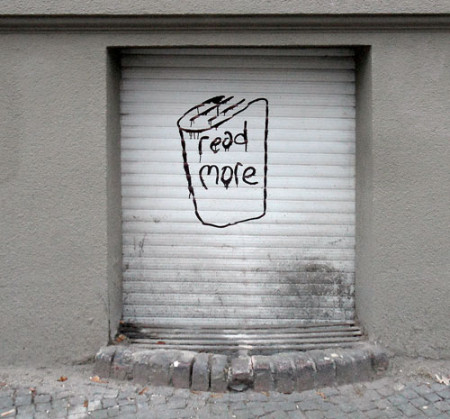
Photo: onnola (CC)
My picks for #sundayread for Jan. 4, 2015:
More posts from Wade this week:
The latest #sundayread tweets

The following chapter is an excerpt from Birmingham author Marie Sutton’s “The A.G. Gaston Motel in Birmingham” [aff. link]. She is a writer with a passion for immortalizing the African-American experience, married to the Rev. James Sutton with two children, Simone and Stephen.
In this excerpt, Sutton shares the history of segregated Birmingham and the rise of entrepreneur A.G. Gaston.
• • •
“I couldn’t understand why the color of your skin made you better than me. That didn’t make sense.”
— Brenda Faush, a native of Birmingham
Alabama’s scorching summer days do not discriminate. Beneath the merciless sun, there is neither black nor white, rich nor poor — the warmth oppresses all. From the pristine streets of Mountain Brook to the dusty roads of Acipco-Finley, the thick, humid air can be suffocating and the pavement like hot lava.
If your skin is brown, however, it doesn’t take long for a million little reminders — like needle-thin icicles — to prick you back into reality; not even the indiscriminate Alabama heat can thaw out cold hearts or melt away the blistering, blue knuckle winter of segregation.
During the 1950s — in the sweltering June, July and August months — a Negro child had to still any excitement at the sight of Kiddieland Park. Riding along the endless stretch of Third Avenue West in Birmingham, the fairgrounds could be spotted from the road. The smell of salty, buttered popcorn and sweet, airy cotton candy was a seductive lure. The bright, colorful Ferris wheel sliced through the skyline, and the grounds danced with spinning boxcars, mock airplane rides and a merry-go-round.
Kiddieland was an annual summer carnival that was created in June 1948 for area children. Described by the Birmingham News as a “miniature Fairyland,” it was touted as “welcome to all,” though it was understood that that meant everyone except Negroes. The fair featured Sunday concerts, “hillbilly” shows, a “pint-sized edition of the Southern Railway’s Southerner” train and advertisements that showed rosy-cheeked children drunk with glee. It was not until years later that blacks were allowed to come, but only on the last day when the stuffed toys were usually picked over and nearly gone; the vendors were packing up and the popcorn stale.
Ask a room full of blacks who grew up in Birmingham during that time, and only a scant few won’t mention how their memories were stained by not being allowed to attend the fair.
“I remember looking over there and knowing that I couldn’t go and not quite understanding why,” remembered Samuetta Hill Drew, who was a colored child in Birmingham during the 1950s.
Tamara Harris Johnson’s parents tried to shield her from the Kiddieland discussion, she said. Even though the street on which the fair sat was a main artery to downtown, her parents, and many others, found alternate routes so as not to explain why admission to the fair was more than a dime. It also required that your skin be white.
That was the way it was in Birmingham. If you were black, you were only given access to scraps of the American dream, the torn and tattered pieces, the chewed up and spit out ones. Jim Crow laws made sure of it.
City ordinances deemed it illegal for blacks and whites to play cards together or even enjoy movies collectively unless there was separate seating, entrances and exits. And the only way they could eat in the same room was if they were divided by a solid partition that reached at least 7 feet from the floor. Signs that read “whites only” hung on doorways and water fountains throughout the city. Even the telephone directories noted whether people or businesses were “C” or “Colored.”
The government’s spies
to those little creatures who
want in the bathroom.
• • •
Read more haiku.
Subscribe via RSS to Wade’s Daily Haiku. Or have it delivered daily by e-mail.
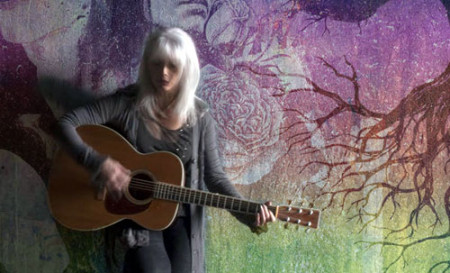
They’re playing DC to honor a Birmingham songbird.
The extravaganza “The Life and Songs of Emmylou Harris: An All-Star Concert Celebration” promises a roster of two dozen artists performing the singer-songwriter’s works. The show takes place Jan. 10 at Washington’s DAR Constitution Hall. Tickets are $86.15 to $239.90.
Buddy Miller and Don Was serve as musical directors, with a jam-packed lineup:
|
|
The concert will be filmed for possible release on television or DVD.
Harris, a Birmingham native, most recently released “Old Yellow Moon” with Rodney Crowell in 2013. It reached the Billboard Country Top 10 and earned her a 13th Grammy Award.
Emmylou Harris
• More Emmylou Harris coverage
Video: “Love and Happiness” (live), by Emmylou Harris, Shawn Colvin and Buddy Miller
Every day is spring,
summer, winter, fall. Every
night births a new dawn.
• • •
Read more haiku.
Subscribe via RSS to Wade’s Daily Haiku. Or have it delivered daily by e-mail.


Error: Feed has an error or is not valid.


