a crowded field
Saturday, September 26, 2015 by Wade Kwon
Fall TV endures
as a launch point and graveyard
of few sparks, quick ends.
• • •
Read more haiku.
 Subscribe via RSS to Wade’s Daily Haiku. Or have it delivered daily by e-mail.

Saturday, September 26, 2015 by Wade Kwon
Fall TV endures
as a launch point and graveyard
of few sparks, quick ends.
• • •
Read more haiku.
Subscribe via RSS to Wade’s Daily Haiku. Or have it delivered daily by e-mail.
Friday, September 25, 2015 by Contributor

Photo: Shannon (CC)
The Sloss Music and Arts Festival launched earlier this year.
While new events can enrich city life, many residents continue
to lack basic services and help.
•
Get the full version of this essay in our free ebook.
Details at the end.
•
By Caperton Gillett
I’d never really considered the future of Birmingham. In my inherent cynicism, I figured that the future of this city would be more or less identical to the present.
 It’s not something one likes to discover about oneself.
And I recognize that it’s neither entirely accurate nor entirely founded. Things in Birmingham are changing dramatically for the better. It’s a place to be on purpose. We’re on lists that start with “The Top 10 Places” — and good ones, not like “The Top 10 Places for Competitive Tulip Growers.” A metropolitan area once known for largely for racial tension, record-breaking bankruptcy and obesity (we’re Top 3!) is now a city worth bragging about, and more so seemingly every day.
Birmingham has a legitimate downtown loft district, complete with actual entertainment, culture and nightlife in an area that used to roll up its sidewalks at 9 p.m. Downtown and surrounding areas are filling up with homegrown stores and restaurants, keeping money in the local economy and just giving us a reason to get out and meet our neighbors.
We have parks — nice ones. We have a baseball stadium — a really nice one. The hops? Free as a bird. Landmarks and cultural touchpoints are being restored with an eye to preserving our history instead of ignoring it; our sidewalks are literally teeming with filmmakers and walkers and crawlers of art. We have festivals the way rural towns have agricultural fairs (are we going to start crowning a Miss Cask and Drum? please?), and they’re well attended.
Just as notable as the positive changes are the changes that haven’t been happening. And the people to whom they haven’t been happening.
The ZIP code encompassing the loft district, many civic buildings and much of the new culture and entertainment happens to be the second-poorest ZIP code in Alabama, the seventh-poorest state in the country. The poverty rate surrounding all of those gorgeous luxury lofts is 50 percent; citywide, the rate is just above 30 percent.
Increasingly trendy neighborhoods like Avondale are pushing out crime and unpleasantness to make way for art, quirky bars, home renovation and rising property values. But caught in the tide are some longtime residents who can’t afford to hang with increasingly affluent newcomers. Often, infrastructural issues long unaddressed by the city finally see action once the neighborhood is nice enough to be deemed worth fixing.
The growth and revitalization of these de-vitalized parts of the city isn’t a bad trend. Residents have organized, worked hard and worked consciously to make their neighborhood a better place by reviving dilapidated houses, bringing in local businesses and supporting schools. Avondale is unquestionably a cleaner, safer and livelier neighborhood, thanks to its proponents.
But many neighbors who benefit from it aren’t the ones who made their homes there before it got fancy. “Improving neighborhoods” and “improving life for current residents” aren’t always simultaneous goals.
Issues like poverty must be addressed head-on. If an area is improved by pushing out the impoverished, they aren’t any better off. They’re just … elsewhere.
• • •
 Caperton Gillett is a senior copywriter at o2 ideas and a freelance writer.
• • •
 The full version of this essay and many more are available in the free ebook, “The Future of Birmingham.”
All you need to do is fill out this simple form. We’ll email you a link to download the book. (And, at no extra charge, we’ll add you to the mailing list for the free Y’all Connect newsletter.)
• • •
Read more essays in our special 10th anniversary series, The Future of Birmingham.
Friday, September 25, 2015 by Wade Kwon
If we scrimp and save
and hold off on paying some
bills, we can eat soon.
• • •
Read more haiku.
Subscribe via RSS to Wade’s Daily Haiku. Or have it delivered daily by e-mail.
Thursday, September 24, 2015 by Contributor
Video: Ike Pigott reflects on the food movement in Birmingham.
•
Get more essays from more contributors in our free ebook.
Details at the end.
•
By Ike Pigott
[Note: video transcript]
The future of Birmingham is food.
So what do I mean by that?
We’re not going to become this agrarian paradise. We’re not going to have urban farming everywhere.
But food is going to be the thing that changes Birmingham and alters its future for the better.
If you think about it, that simple picture I took at the food truck has represented something, for me anyway. It’s one of the areas of the city where you are inclined to see about a third laborers, a third hipsters and a third businesspeople. It’s one of the most egalitarian areas that you’re going to come across in the city.
Every little food truck is like its own little Railroad Park in Birmingham, having just the right mix of people, having a good diverse group of people and having a group of people getting along and communing around something.
It’s been that way for a long time.
And I’m going to take that from the present, and I’m going to go back to the past.
•
More on the Taqueria Guzman Taco Truck.
•
The images of segregation in Birmingham, the images of segregation in the city, often very violent. But the ones that stand out are the ones that seem so innocuous: the restrooms, the lunch counters, where people could be eating together but were prevented from doing so. And that in and of itself was part of the abomination.
But then you look to the future, and I see a future for downtown, I see a downtown that has been trying to grow and trying to build its culture and try to bring people for a very long time.
And what’s the piece that is the linchpin that is really going to spur a renaissance in downtown Birmingham in bringing people in? It’s the Publix — it’s the grocery store, it’s food. You put the kind of food in there that brings people together, and people can’t help but be together.
So there’s your answer: It’s food.
• • •
 Ike Pigott is a veteran communicator based in Birmingham who got out of television news and back into life. Now working for Alabama Power, he specializes in corporate communications, but has interests that are all over the place.
• • •
Essays from other contributors are available in the free ebook, “The Future of Birmingham.”
All you need to do is fill out this simple form. We’ll email you a link to download the book. (And, at no extra charge, we’ll add you to the mailing list for the free Y’all Connect newsletter.)
• • •
Read more essays in our special 10th anniversary series, The Future of Birmingham.

Photo: Ike Pigott (reprinted with permission)
The First Avenue North gas station lot is a gathering place for
fans of the Taqueria Guzman taco truck. Food can be the basis
of a coming together in a city long divided.
Thursday, September 24, 2015 by Wade Kwon
A drone came to my
front door to deliver a
newborn and cigars.
• • •
Read more haiku.
Subscribe via RSS to Wade’s Daily Haiku. Or have it delivered daily by e-mail.
Wednesday, September 23, 2015 by Wade Kwon

Photo: Ralph Daily (CC)
Local media outlets have seen big changes in their news
operations. But not all the changes have been for the better
for the audience.
•
Get the full version of this essay in our free ebook.
Details at the end.
•
Close to a year ago, I gave a talk at a conference here in town about the state of the media. It’s one of the most depressing presentations I’ve ever given.
The talk has become badly out of date: The news has gotten much worse.
Birmingham, once a small haven for media, is a smoking crater. With each passing year, the crater grows a little wider, a little deeper.
That’s not to slight some of the fine folks left to hold down the fort. The decisions that got us to this ruination were made largely out of state, without regard to subscribers, advertisers, journalists or citizens.
I find that painful to accept as a media consumer, producer, observer and fan.
Local media outlets, whether broadcast, print or Web, have embraced a common playbook: Get eyeballs any way possible. No headline too outrageous, no teaser too wild, no rumor too preposterous. Let us click and bait, for tomorrow we die.
The tyranny of the popular dictates coverage, meaning complete annihilation of watchdog reports on government at every level. Tin-pot mayors from Tarrant to Fairfield, rejoice: Absolutely no one is guarding the henhouse, and better than that, no one cares.
I live in Birmingham proper, but even the city hall coverage here is superficial. While I may know what happens in council meetings, I lack the proper context to understand how it affects me, my wallet, my neighborhood and our future.
We’ve been on this path in Birmingham for a decade or so.
Ten years ago today, on Sept. 23, 2005, my newspaper closed for good. The Birmingham Post-Herald’s death provided a preview of the mass layoffs to come for hundreds upon hundreds of reporters, editors, photographers, copy editors, producers, designers and more.
We see a steady stream of new faces as replacements, cheap disposable labor with no ties to the community. We’re told they’re good at generating content and engaging the audience.
What have we lost in this clumsy transition to all-out digital one-upmanship? That’s the most difficult category to measure, the absence of reportage.
We are completely on our own. And it’s only going to get worse.
I couldn’t do any better. Invest a million dollars into a fantasy news operation I lead, and it would either barely break even or steadily bleed money, even with talented reporters on the cheap. It would gain a small but loyal audience with above-average income, featuring stories that win accolades and awards.
And sooner rather than later, it would fold.
The future of Birmingham is year-round coverage of Alabama and Auburn football, with breaks for viral memes and copy-paste media releases. It’s more airtime for newscasts with lucrative commercials. It’s Sunday-only print editions with 6-day-old news.
It’s the manufacture of outrage and delight to provide dwindling profits for outsider owners, at the expense of an informed citizenry and service as fearless guardians against corrupt government and business.
No one is coming to save us — not newspaper publishers, not partisan bloggers, not seasoned journalists, not Facebook gossipmongers — from our crater of ignorance.
• • •
The full version of this essay and many more are available in the free ebook, “The Future of Birmingham.”
All you need to do is fill out this simple form. We’ll email you a link to download the book. (And, at no extra charge, we’ll add you to the mailing list for the free Y’all Connect newsletter.)
• • •
Read more essays in our special 10th anniversary series, The Future of Birmingham.
Wednesday, September 23, 2015 by Wade Kwon
My superpowers
are procrastination and
working on deadline.
• • •
Read more haiku.
Subscribe via RSS to Wade’s Daily Haiku. Or have it delivered daily by e-mail.
Tuesday, September 22, 2015 by Contributor

Photo: Elizabeth Swift (CC)
A giant crane is a sign of progress along Birmingham’s skyline.
More than 30 projects are under way in or near downtown.
•
Get the full version of this essay in our free ebook.
Details at the end.
•
By Rod Walker
After several decades of decline, the people of Birmingham are finally starting to shed the inferiority complex that so many have felt for so long. We’re seeing cranes on the skyline, the old, long empty buildings being restored with new eateries, music venues, spaces for the arts, for recreation and for residence. We may be on the threshold of living up to the “potential” talked about for so many years.
When state laws changed in 2009 making small breweries possible, a new art form arrived: craft beer. Avondale Brewing Company was the first building block for the renovation of the neighborhood, which now includes several eateries, art galleries and a new music venue, Saturn.
Railroad Park seems to have been the beginning. Then came the Barons’ new stadium. Then more new projects: the Uptown restaurant district; the Westin; the living spaces, restaurants, arts and entertainment in the loft district.
The change now seems to be happening exponentially with more than 30 projects under way in or near downtown, either new construction or renovation. They include the Thomas Jefferson Hotel, the Pizitz building, the Booker T. Washington Insurance building, the Lyric Theatre, the Powell steam plant, the Merita Bread building and the Publix supermarket.
I’m very excited about what Birmingham is becoming. The magic is back, only without the choking pollution and the barbaric racial segregation laws. We should be happy about all the good things without losing sight of lingering challenges.
The first challenge is jobs. What it takes to get new Birminghamians to stay are good-paying, stable careers. For cities like Austin that have experienced rapid growth, many jobs have been in technology. If we could add high-tech jobs to our health care and banking sectors, we would have an easier time attracting transplants.
The second challenge is old perceptions. Many people around the world have a negative perception of this city for several reasons:
The best way to overcome negative stereotypes is to create a new positive image that overshadows the old images. If we try, we can do that.
The last challenge is inequality. Birmingham is much more than just downtown or Avondale or Southside. Neighborhoods such as Ensley, Titusville, North Birmingham, Fountain Heights and Collegeville are just as much a part of this city. We should use our newfound prosperity to improve the lives of all citizens. By upgrading the infrastructure everywhere. By improving public transportation.
People from more prosperous areas of the city should reach out to those in less prosperous areas to help those neighborhoods improve themselves. We should invest in new businesses that provide goods, services and jobs in areas that need them most.
If we keep our heads up, if we never give in to the negativity spouted by some, and if we never forget our neighbors in all parts of the city, the future of Birmingham is brighter than ever!
• • •
 Rod Walker is a driver for Yellow Cab and a blogger at Birmingcabbie.
• • •
The full version of this essay and many more are available in the free ebook, “The Future of Birmingham.”
All you need to do is fill out this simple form. We’ll email you a link to download the book. (And, at no extra charge, we’ll add you to the mailing list for the free Y’all Connect newsletter.)
• • •
Read more essays in our special 10th anniversary series, The Future of Birmingham.
Tuesday, September 22, 2015 by Wade Kwon
Authorship is dead.
Digital miscreants take
anything for fun.
• • •
Read more haiku.
Subscribe via RSS to Wade’s Daily Haiku. Or have it delivered daily by e-mail.
Monday, September 21, 2015 by Wade Kwon
A look at Birmingham in videos …
The World Cup Champion U.S. Women’s National Team beat Haiti 8-0 on Sunday in front of 35,753 fans at Legion Field, the largest ever for a stand-alone women’s national team match in the Southeast. From U.S. Soccer.
•
The Guiding Light Church choir of Irondale sings “All Lives Matter” at the Glenn Beck rally. From the Blaze.
•
Tracia Jones on the runway at Birmingham Fashion Week 2015 (our vertical video of the week). From Tjs D.
•
Birmingham band String Theory plays covers of “Billie Jean,” “Rollin’ in the Deep” and “Bohemian Rhapsody.” From Alex Cape.
•
Music video for North Carolina R&B singer-songwriter Steven A. Clark’s “Can’t Have.” From Dustin Lane.
•
A car on fire in North Birmingham between 18th and 19th Streets North at Ninth Avenue, next to I-20/59. From highlandparkninja.
•
Republican presidential candidate Ben Carson speaks at the Gridiron Men’s Conference in June at Legacy Arena downtown. From Spa Guy.
•
Hunter College students from New York tour civil rights sites in Atlanta, Montgomery, Selma, Little Rock, Memphis and Birmingham. From Crystal Waterton.
•
Bob Friedman participates in the 2009 “My Favorite Poem” event at the Alabama School of Fine Arts. From Bob Friedman.
•
A look at Confederate Motors, 10 years after coming from New Orleans to Birmingham following Hurricane Katrina. From Alabama NewsCenter.
•
The ROSA robot helps UAB doctors detect the source of seizures in patients with epilepsy. From UAB News.
•
More than 100 members from motorcycle clubs left Fairfield for a fund-raising ride for sickle-cell disease research. From Dejon Henry.
•
Landing a small plane at the Birmingham-Shuttlesworth International Airport. From bombud1.
•
Sanspointe Dance Company performs “An Opening” at its 2015 Dance-a-Bama tour in June at the Dance Foundation in Homewood. From Sanspointe Dance.
•
A Periscope rant on the All Lives Matter rally. From Nappy Natural Girl.
•
Mountain Brook Baptist Church’s Stephen Fryrear performs “The Badlands,” the title track off his album of worship songs. From Starnes Publishing.
•
Driving through downtown Birmingham. From J Utah.
•
Racing go-karts at the Autobahn Indoor Speedway in Bessemer. From Brandon Cruise.
•
Birmingham writer Ashley M. Jones wins a $30,000 Rona Jaffe Foundation Writers’ Award (at 2:02). From Rona Jaffe Foundation.
•
Slice Pizza’s Terrill Brazelton makes pickled shiitake mushrooms (our other vertical video of the week). From Slice Pizza and Brewhouse.
•
Filming outside the FBI building downtown. From Bama Camera.
•
Hanging leg raises. From rigorousmedia.
•
Conservative talk show host Glenn Beck marched with more than 20,000 supporters in August through downtown for his All Lives Matter march. From al.com.
•
MunaLuchi Bridal City-to-City Tour stops in August at Woodrow Hall in Homewood. From Danny Kang Austin.
•
Gadsden rapper Big Henry performs in August at the Nick on Southside. From 226 Film Production.
•
A Periscope video of Yohance Owens of the Village Creek Society (our other other vertical video of the week). From People, Places and Things with Isis M. Jones.
•
Move-in day for the Class of 2019 at Birmingham-Southern College. From Birmingham-Southern College.
• • •
Send us links to your videos. | More videos on the Birmingham channel.
Monday, September 21, 2015 by Contributor

Photo: Bahman Farzad (CC)
The historic Alabama Theatre has been home to many color
films over the years. It anchors a growing cultural scene
in Birmingham.
•
Get more essays from more contributors in our free ebook.
Details at the end.
•
By Candie A. Price
I may be showing my age, but when I was younger, I remember watching old movies that boasted a color process called Technicolor. Upon further research, I found the words “candy-colored,” “boisterous” and “lush” used to describe its various effects, moods and sensations.
This process monopolized cinema’s first half-century, accurately producing the full spectrum with amazing results. Although it’s not used nearly as much in today’s filmmaking, the idea of something being in Technicolor intrigues me still.
How do I relate this to Birmingham? As a Philly girl in the South, I am fully aware of Birmingham’s history and need to shed her ugly images, specifically the ruthless acts of domestic terrorism during the civil rights movement. However, 13 years here, I see a Birmingham that is learning, growing and attempting to move forward from her stigma of 1963.
Our city is moving from the black-and-white photos of segregation, hate and racial disunity toward a more welcoming collage in Technicolor. Of course, we have room for improvement in many areas — socio-economic disparity, racial relationships and other issues — that also exist in many cities. Birmingham has a unique opportunity to show the rest of our country, especially in such volatile times, that change, forgiveness, resiliency and vibrancy can happen everywhere, especially in a place formerly dubbed “Bombingham”!
The future of Birmingham is candy-colored, boisterous, lush: a vibrant city wherein people of all walks of life can enjoy the city center; Railroad Park; Uptown; CityFest; a growing foodie scene; neighborhood revitalization via REV Birmingham; museums; top-notch medical research and educational facilities; countless conferences and events for small businesses and entrepreneurs; one of the most philanthropic cities in the country; affordable cost of living; impressive banking center; and a growing diverse cultural climate. Just a few of the strides made in the last five decades.
We still have much work to do, but we are no longer seeing life in Birmingham in terms of black and white. The colors, representing all of our citizens working together and in tandem, can produce a more accurate depiction of what a community should look like. A diverse spectrum, resulting in a dazzlingly rich quality of life for all … in full Technicolor! Our future depends on it, and just like 50 years ago, the world is still watching.
• • •
 Candie A. Price provides public relations and marketing services to Christian authors, entrepreneurs, ministries and businesses. Her blogs include Your PR Diva and Philly Girl in the South.
• • •
Essays from other contributors are available in the free ebook, “The Future of Birmingham.”
All you need to do is fill out this simple form. We’ll email you a link to download the book. (And, at no extra charge, we’ll add you to the mailing list for the free Y’all Connect newsletter.)
• • •
Read more essays in our special 10th anniversary series, The Future of Birmingham.
Monday, September 21, 2015 by Wade Kwon
Coffee and good books,
jazz and blueberry pancakes.
Not a soul for miles.
• • •
Read more haiku.
Subscribe via RSS to Wade’s Daily Haiku. Or have it delivered daily by e-mail.
Sunday, September 20, 2015 by Contributor

Photo: Liz Parker (reprinted with permission)
Tina, left, and Maya are pet stars on Instagram. They are
among thousands of companion animals in Birmingham.
•
Get more essays from more contributors in our free ebook.
Details at the end.
•
By Joey Kennedy
The future of Birmingham has to involve animals. A progressive city — and our city is a progressive one — can’t put animals, especially companion animals, in second place.
A society can be judged on how well it treats its animals. If so, Birmingham would be judged poorly.
Many people dump their dogs and cats in neighborhoods, knowing that somebody is likely to take care of them. Sometimes yes, sometimes no.
Animal control is a hell into which they go. Often, they never come out. Animal control officers take strays to the Greater Birmingham Humane Society, where they’re more likely to be adopted than under previous systems. Still, most strays that enter the system are put down. Killed. Doesn’t matter if they’re healthy and adoptable. So many animals come in that they have to be killed for space.
Most animals in Jefferson County taken in by animal control come from the City of Birmingham. Many are pit bulls, the Satan of dogs. That’s a shame, because pit bulls are among the most gentle breeds. Golden retrievers, cocker spaniels and Chihuahuas are much more aggressive. Yet, the pit bull gets that bad rap.
Part of the problem is that pit bulls are used for fighting. Collateral dogs — pugs, cockers, other pit bulls, Labrador retrievers — are used as bait dogs, to make the fighting pits more vicious. I can train pugs to fight; that’s a human flaw, not an animal one.
This happens in Birmingham every day.
So for our future, the city council needs to adopt these measures to make life better for all animals:
An anti-tethering ordinance. Homewood recently passed one, setting a time limit that dogs can be chained outside without supervision. Keeping them on chains 24/7 makes them mean. Birmingham should put limits on how long dogs can be chained outside without adequate food, water and shelter.
A licensing program for pets. Owners who have them spayed or neutered would pay a nominal cost, say $5, for licenses. Those who insist on foregoing this process would pay a much higher fee, $25 to $50.
Feral cat colonies. Instead of ignoring this persistent problem, let’s encourage TRN: trap, neuter and return. This would fund rescue groups to trap these cats, spay or neuter them and release them into their colonies. They won’t reproduce, eliminating the problem.
Recognition of animal rights. We must acknowledge that dogs and cats are sentient beings. They deserve life like we deserve life. They think and plan, feel pain, hope and love. Birmingham’s future must include companion animals as part of the culture and positive benefits of the city. These animals need love, not derision. They need care, not indifference. They know what we’re doing.
No-kill policies. No upside exists for killing thousands of dogs and cats a year when they could be saved. It’s not a budget question; it’s a humanitarian question: Are we humans, or are we something else? The city should include the Greater Birmingham Humane Society in all levels of animal control and care. The organization has the resources and know-how to save these animals from certain death.
We need to treat the city’s animals as we treat ourselves. They want to live. To simply collect and kill them is not what we want the future of Birmingham to be. That’s a cruel future. That’s an unacceptable future. That’s a future of demise for the city we love.
• • •
 Joey Kennedy is a Pulitzer-winning editorial writer and a veteran journalist for four decades. He teaches composition and American literature at the University of Alabama at Birmingham, serves as the back-page columnist for B-metro magazine, writes a weekly column for Alabama Political Reporter and is co-founder of Animal Advocates of Alabama.
• • •
Essays from other contributors are available in the free ebook, “The Future of Birmingham.”
All you need to do is fill out this simple form. We’ll email you a link to download the book. (And, at no extra charge, we’ll add you to the mailing list for the free Y’all Connect newsletter.)
• • •
Read more essays in our special 10th anniversary series, The Future of Birmingham.
Sunday, September 20, 2015 by Wade Kwon
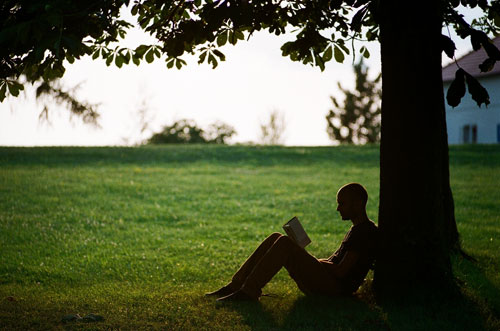
Photo: Marketa (CC)
My picks for #sundayread for Sept. 20, 2015:
•
Don’t miss our new 26-part series:
★ The Future of Birmingham ★
•
More posts from Wade this week:
The latest #sundayread tweets
Sunday, September 20, 2015 by Wade Kwon
When does fall start? Ask
a weather forecaster, a
poet and a child.
• • •
Read more haiku.
Subscribe via RSS to Wade’s Daily Haiku. Or have it delivered daily by e-mail.


Error: Feed has an error or is not valid.


